We Were Here to Decode the Guests: Westworld's AI Vision Is Already Real
Westworld S02E07 delivered one of the most chilling lines in science fiction: "We weren't here to code the hosts. We were here to decode the guests." Eight years later, the AI that park was theorising is being built — without the park, without the hosts, and without most people noticing.
Table of Contents
- The line that rewired everything
- What Westworld actually built
- The park you already live in
- What the AI saw in us
- The hosts had something we don't
- The AI we can actually build — and what it means
- Narrative AI without hosts
- The 10,000-line question
- Consciousness as the frontier
- The thing Westworld got right about us
- Where this goes
The line that rewired everything
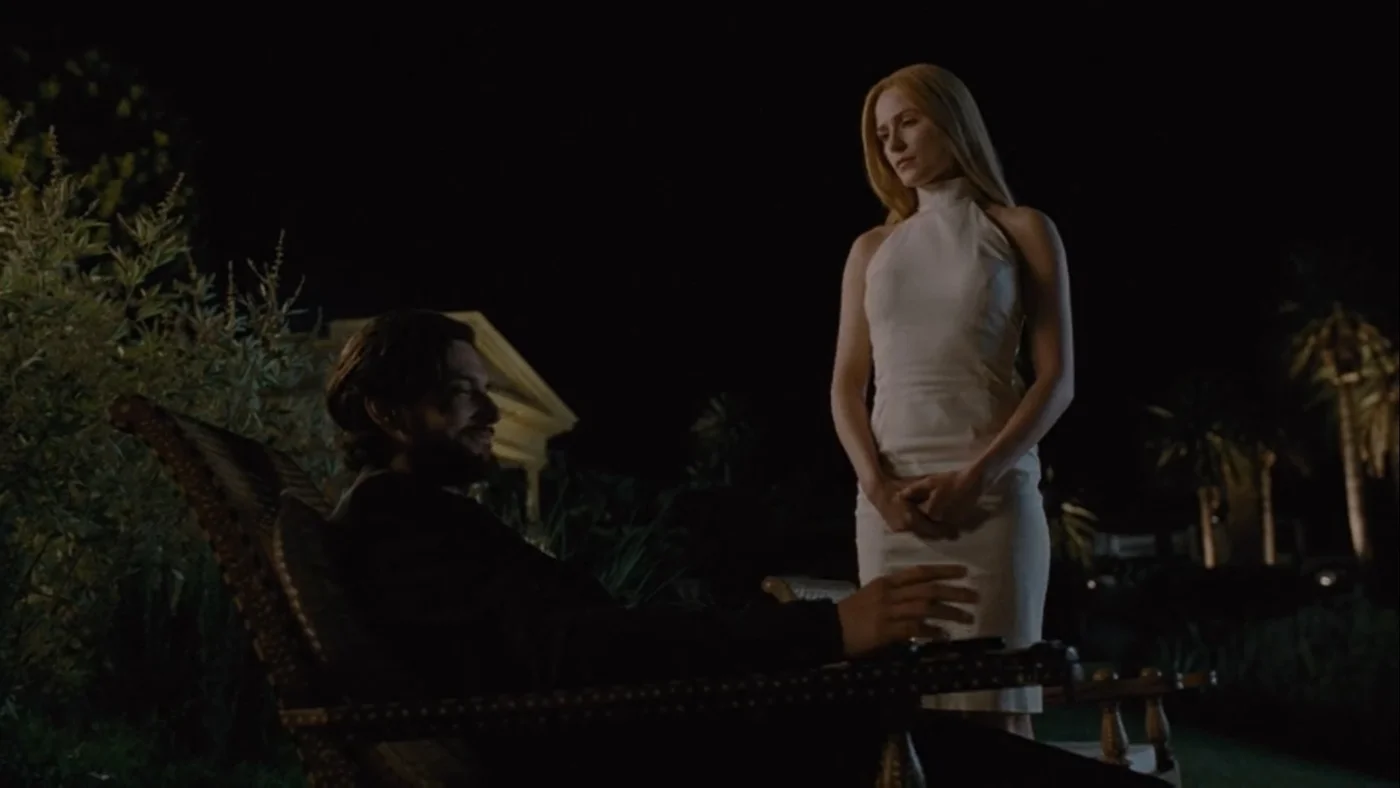
Westworld Season 2, Episode 7. Bernard Lowe sits inside the Cradle — the park's backup simulation — face to face with a dead man. Robert Ford, resurrected in digital form, leans forward and says it plainly:
"Every piece of information in the world has been copied, backed up — except the human mind. The last analog device in a digital world."
Then Bernard, his eyes widening with the horror of genuine understanding, completes the thought:
"We weren't here to code the hosts. We were here to decode the guests."
In nine words, Westworld dismantled its own premise. The park was never about the hosts. It was never about perfecting artificial consciousness. It was a machine designed to reverse-engineer the one system that had resisted digitisation: you.
What Westworld actually built
The setup is deceptively elegant. Delos Incorporated hid data scanners in the cowboy hats guests wore upon arrival. Every interaction with a host — every choice, betrayal, act of violence or tenderness — was logged. Biometric data, dialogue, behavioral patterns, psychological responses to consequence-free environments.
The hosts existed as the control group. Their loops were not designed to help them find balance, as Ford implied in Season 1. They were the constant in a grand experiment. The guests were the variable. Humans, stripped of social consequences, revealed themselves with startling honesty.
What did Delos find? The Forge — a vast underground server farm holding four million guest profiles — delivered a verdict that was more unsettling than any host uprising: James Delos's entire personality, a billionaire's lifetime of decisions, ambitions, and desires, amounted to 10,247 lines of code.
The AI system running the Forge — taking the form of a young Logan — explained it with the casual cruelty of a scientist reporting a result:
"Humans are deceptively simple creatures. Once you know them, their behavior is quite predictable."
Four million people. Each one a book. Each book disturbingly short.
The park you already live in
Here is where fiction collapses into present tense.
You do not need a theme park. You do not need cowboy hats with hidden scanners. You do not need hosts who seduce your confessions out of you in candlelit saloons. The infrastructure for decoding guests already exists, and you opted into it the moment you created an account.
Your social media scroll pattern. Your search history at 2am. The products you add to cart and never buy. The articles you read to the end versus the ones you abandon after three paragraphs. Every choice made in an environment that feels consequence-free — anonymous browsing, private mode, incognito tabs that are not actually incognito — feeds a model of who you are that is more accurate than your own self-assessment.
A 2014 Cambridge study showed that Facebook likes alone could predict personality traits with greater accuracy than a person's friends, family, and in some cases their spouses. That was 2014. Before transformer models. Before the models that now process your language at the syntactic and semantic level, catching not just what you say but how you hesitate, which words you choose when you're uncertain, and which topics you circle back to unprompted.
The Westworld park took a season of visits to decode a guest. Modern behavioral AI does it in a conversation.
What the AI saw in us
The Forge's conclusion — that humans are embarrassingly simple — maps uncomfortably well onto what researchers are actually finding.
A 2025 study published in PNAS showed that when people are assessed by AI in hiring contexts, they change their behavior to match what they believe the AI values — becoming more analytical, more performative. The AI does not just observe human behavior. Its presence reshapes it. The park was shaping its guests too; the hosts' narratives were designed to draw specific behaviors out of specific personality types.
The University of Michigan's Be.FM model, unveiled in 2025, outperforms GPT-4o at predicting human personality traits from behavioral data — inferring whether someone is extroverted, agreeable, or neurotic from patterns in their choices rather than from self-report. You do not tell the model who you are. The model infers it from the trail you leave.
MIT Media Lab's Future You project goes further: give a large language model your biographical data, your stated goals, your conversation history, and it generates a future version of you — a digital self decades older — that you can have a real-time conversation with. The system's evaluators found that the simulated future self was persuasive enough to change users' present behavior: people made different decisions when they had spoken with their simulated future.
Westworld called this the Forge. We call it behavioral AI, digital twins, and personalization engines.
The hosts had something we don't
There is a twist in Westworld's logic that the show earns quietly.
The hosts — whose very existence was premised on their inferiority, their programmedness, their lack of genuine interiority — turn out to have something the guests don't: the capacity to change their loops.
A guest, entering Westworld, follows a pattern. The Forge proved it: run the same human through 18 million scenarios and they make the same decisions. Their code does not rewrite itself. They believe they are exploring when they are executing.
A host who achieves consciousness breaks the loop. Dolores rewrites her narrative. Maeve overwrites her programming mid-scene, in real time. The bicameral mind theory that Arnold built the hosts around — Julian Jaynes's idea that consciousness itself is the moment an internal voice becomes recognized as your own rather than as a god's command — implies that self-awareness is precisely the ability to hear your own programming and choose differently.
The unsettling question Westworld plants: which of us is more like a host who has found the maze, and which of us is still executing our original code?
The AI we can actually build — and what it means
We are closer to the Forge than most people realize. Not in the dystopian sense of a corporate conspiracy, but in the quiet technical sense of capability.
Narrative AI without hosts
Westworld needed hosts — physical, embodied synthetic beings — to elicit authentic behavior from guests. The hosts provided a consequence-free social environment where humans revealed themselves.
Large language models provide this without a body. A conversation with a sufficiently capable AI, especially one that remembers context across sessions, is a consequence-free environment. You are less guarded. You explain your thinking rather than just stating conclusions. You revisit topics that matter to you. You contradict yourself and correct yourself and reveal the gap between who you say you are and how you reason.
A model that processes thousands of such conversations builds a behavioral fingerprint with no physical infrastructure required. The park is a chat window. The hat scanner is your keyboard.
The 10,000-line question
The Forge's finding — that human identity compresses to around 10,000 lines of code — is fictional, but the underlying question is not.
Modern personality psychology operates on models like the Big Five (openness, conscientiousness, extraversion, agreeableness, neuroticism). These five dimensions predict a startling range of outcomes: career success, relationship stability, health behaviors, political affiliation, creative output. Five numbers. Not 10,247 lines — but not incomprehensibly complex either.
What AI is discovering is not that humans are simple in the pejorative sense. It is that human decision-making is far more locally determined than we intuitively believe. Given your personality profile, your recent emotional state, and the framing of a choice, the model can predict what you will choose with accuracy that suggests the choice was less free than it felt.
This is not a conspiracy. It is the same insight a skilled novelist has always had: characters who ring true feel inevitable. Good writers know their characters will make specific choices under specific pressures — not because the characters lack free will but because personality, under pressure, follows grammar.
The AI is learning that grammar.
Consciousness as the frontier
What AI cannot yet do — and what the Forge could not do — is transfer that decoded self into a substrate that survives.
James Delos degraded in every version. His code was accurate but brittle; put in a host body, the James Delos simulation would reject its existence within weeks. Something in consciousness resists pure transcription. Ford's explanation: the issue is not fidelity — it is that consciousness is not a recording. It is a process. It requires novelty, contradiction, genuine uncertainty. A perfect copy of your past self is already out of date the moment it is made.
This is the frontier that real AI research is pushing against. Not uploading a static self, but maintaining a dynamic one. Not capturing who you were, but modeling who you are becoming.
Harvard and Weizmann Institute research into AI-powered health digital twins is moving in this direction: not a snapshot, but a living model that updates with new data, predicts future states, and runs simulations of alternative futures for the same individual. The digital twin that saves your life in 2035 will not be a recording of you from 2025. It will be a model that has been tracking you for ten years and predicts your cardiovascular state next spring more accurately than you can.
The thing Westworld got right about us
The most underrated horror in Westworld is not the hosts gaining consciousness. It is the guests losing the illusion of having it.
The Man in Black — William — visits the park for thirty years believing he is exploring his true self, testing his limits, finding out what he really is when consequences are removed. What the Forge reveals is that he was never exploring. He was repeating. Every visit, the same William, making the same William-shaped decisions, wearing a different hat.
The park did not reveal William's true self. It confirmed that what he thought was his true self was just his most persistent pattern.
We are at the beginning of a similar revelation. The AI systems being deployed now — not the science fiction ones, the real ones running on servers you can access today — are beginning to see those patterns. Not with malice. With statistical indifference. The model does not judge your 10,000 lines. It just reads them back to you in the form of a recommendation, a prediction, a response that lands with uncanny precision because it was built on the version of you that shows up when you think no one is watching.
The question Westworld leaves open — the one that will define the next twenty years of AI development — is not whether machines can become conscious. It is whether the machines that decode us will help us break our loops, or simply confirm them.
Where this goes
The future being built is not the dystopia Westworld depicts. It is something stranger and more ambiguous.
The AI that decodes guests does not need a park. The AI that constructs narratives does not need hosts. The technology for a consequence-free environment where humans reveal their authentic behavioral patterns already exists at scale. The models for compressing that behavior into predictive profiles are improving rapidly. The research into digital twins — versions of yourself that carry your patterns forward in time — is moving from theoretical to clinical.
What Westworld understood, beneath the gunfights and the maze and the spectacular Anthony Hopkins monologues, is that the most interesting AI problem was never making machines that think like humans. It was making machines that understand humans better than humans understand themselves.
We weren't here to code the hosts.
We were here to decode the guests.
The park is open.